
Why More Marketing Teams Are Ditching Project-by-Project Creative Work (And What They're Doing Instead)
If you manage marketing at a mid-size company, you already know the frustration. You need a new product animation for a campaign launching in two weeks. You also need social graphics for next week's posts, a cut-down video for Instagram, and a sales deck refreshed before the next pitch. Oh, and the trade show banner from last year needs updating.
So you do what most marketing managers do: you juggle. You reach out to a freelancer here, a design agency there, submit a ticket to the one overworked in-house designer, or spend an afternoon trying to wrangle something together in Canva.
It works — kind of. But it's slow, it's expensive, and it never quite feels under control.
There's a different way to think about creative production, and it's worth understanding before your next campaign sprint.
The Problem With "Project-Based" Creative

The traditional model for getting creative work done looks something like this: you identify a need, scope a project, get a quote, negotiate, wait for availability, brief the team, review drafts, revise, and finally receive a deliverable — usually right at (or past) the deadline.
For a one-off rebrand or a major campaign launch, that process makes sense. But for the ongoing creative needs that marketing teams deal with every single week? It creates constant friction.
The hidden costs add up fast. Beyond agency fees or freelancer rates, there's the time you spend sourcing, briefing, and managing vendors. There's the inconsistency that comes from working with different people on different projects. There's the mental overhead of tracking five different creative relationships at once.
And when you need something quickly — a topical social post, a fast-turnaround video edit, a new ad variation — the project-based model simply wasn't built for that speed.
What a Creative Subscription Actually Looks Like
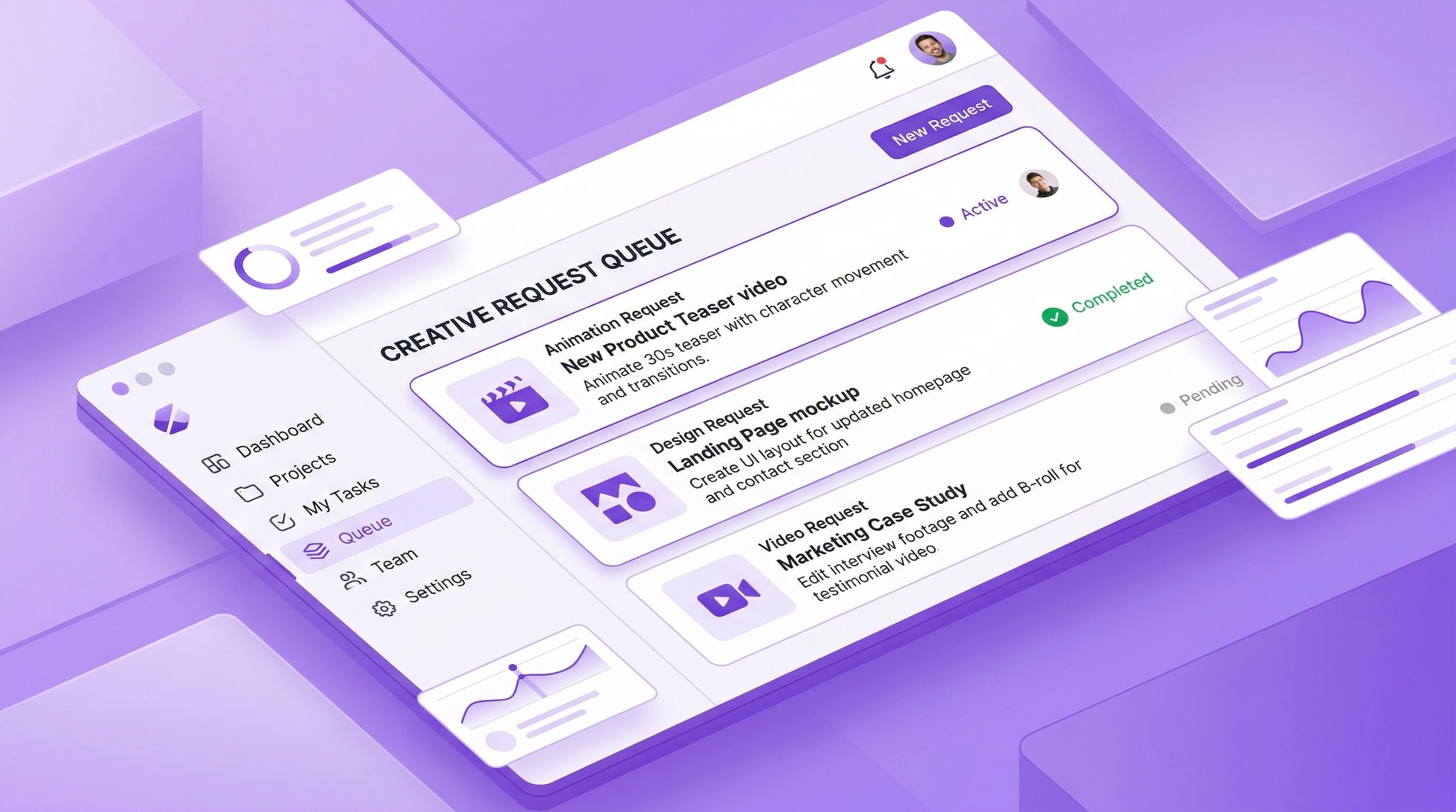
The idea behind a creative subscription (sometimes called a "creative seat" or "design subscription") is straightforward: instead of paying per project, you pay a flat monthly rate and get ongoing access to a dedicated creative team.
You submit requests. The team works through them. You review, provide feedback, and get polished deliverables — without a new contract, a new quote, or a new conversation about scope every single time.
At VM, we call our version of this Creative Seat.
Here's what's included in a single subscription:
2D Animation — explainer videos, product animations, motion graphics, animated social content
Social Media Design — platform-ready graphics, story templates, carousel posts, ad creatives
Marketing Graphic Design — sales materials, event graphics, email headers, digital ads, brand collateral
Video Editing — cutting raw footage, adding motion graphics, formatting for different platforms, reels and short-form content
One subscription. One flat rate. All four disciplines, handled by people who do this every day.
Who This Model Works Best For
A creative subscription isn't the right fit for every situation — but for marketing managers running lean teams with consistent creative needs, it tends to be a genuinely good match.
You're probably a good fit if:
You publish content regularly and always seem to be behind on the creative side. You've got campaigns running across multiple channels and need assets in multiple formats. You've outgrown the "ask a freelancer" approach but aren't ready to hire a full in-house creative team. You care about visual consistency but don't always have the bandwidth to enforce it.
You're probably not the right fit if:
You only need creative work a few times a year. You're working on a single, large-scale project with a clear start and end date. In those cases, a project-based engagement is likely the better choice — and we'll tell you that honestly.
The "Unlimited Requests" Question
One thing that often raises an eyebrow: the unlimited requests model. People reasonably wonder — does unlimited actually mean unlimited?
In practice, the way it works is pretty simple. You can have as many active requests in the queue as you'd like. The team works through them in priority order, one (or a small batch) at a time. You're not capped on what you can ask for — you're only working within the natural rhythm of what a skilled team can produce at a high standard.
Think of it less like an all-you-can-eat buffet where everything arrives at once, and more like having a dedicated creative partner who's always working on your next thing.
For most marketing teams, this means their creative backlog actually shrinks for the first time in years.
What Day-to-Day Actually Looks Like
When you're in a Creative Seat subscription, the workflow is designed to be low-friction on your end.
You submit a request — could be a brief, a few reference images, a script, or even just a voice note explaining what you need. The team picks it up, asks any clarifying questions upfront, and gets to work. You receive a draft, leave feedback, and the team refines it until it's right.
There are no surprise invoices for revision rounds. No awkward conversations about whether a change counts as "in scope." No waiting two weeks just to get a quote approved before work can begin.
For marketing managers who spend a meaningful chunk of their week just managing the creative process, this reduction in administrative overhead is often one of the first things they notice.
A Real Example: How Bushnell Golf Uses Creative Seat
Bushnell Golf is one of the most recognized names in golf technology — and like most established brands, their marketing team has no shortage of creative needs every single week.
They work with VM on a monthly Creative Seat subscription, tapping into animation, video editing, and graphic design on an ongoing basis. Rather than spinning up individual projects or waiting on agency timelines, their internal creative team uses the subscription as an extension of their own capacity — offloading the work that needs to get done so they can stay focused on strategy, campaigns, and the bigger picture.
The result is a creative team that actually keeps up with its own roadmap. Weekly deliverables go out on time. The backlog doesn't pile up. And they're not sacrificing quality to hit the pace they need.
It's a good illustration of who the subscription model tends to serve best: not companies without a creative team, but companies whose creative team has more to do than they can reasonably handle alone.
A Note on Quality
The subscription model only works if the output is actually good. A fast turnaround on mediocre work isn't a service — it's just a faster way to produce assets you can't use.
At VM, we're an animation studio first. 2D animation is at the core of what we do, and the other disciplines — social design, graphic design, video editing — sit alongside it because they're part of the same visual storytelling work. The team working on your requests is the same team that produces animation work, not a separate lower-tier production line.
We think the work should speak for itself, which is why we'd always encourage anyone considering a subscription to look at our portfolio before making any decisions.
Is It More Cost-Effective Than Hiring?
This is a question worth thinking through carefully, because the answer depends a lot on your situation.
A single mid-level in-house designer in the US typically costs $85,000+ per year in salary alone — before benefits, tools, management time, and the fact that one person can't reasonably cover animation, video editing, and graphic design at a professional level simultaneously.
A creative subscription gives you access to a multi-discipline team for a predictable monthly cost, with no hiring process, no HR overhead, and the flexibility to pause or cancel if your needs change.
That said, if your creative volume is high enough and your brand needs are specific enough, building an in-house team still makes sense for some companies. The subscription model is a strong option for teams that need professional output across multiple disciplines without the overhead of building and managing that capacity internally.
How to Know If You're Ready to Try It
The easiest signal: look back at the last 90 days and count how many times you needed creative work and either couldn't get it fast enough, couldn't afford what you actually wanted, or ended up with something that wasn't quite right.
If that happened more than a couple of times, the project-based model is probably costing you more than you think — in time, in money, and in campaign performance.
A Creative Seat subscription is designed for exactly that situation. It's not a magic solution, but it's a fundamentally different approach to a problem that a lot of marketing teams have quietly accepted as just "how things are."
It doesn't have to be.
—
VM is an animation studio offering Creative Seat, a monthly subscription for 2D animation, social media design, marketing graphic design, and video editing. If you're curious whether it's the right fit for your team, we're happy to talk through it — no pitch required.