
How Software Companies Scale 2D Animation Without Hiring a Full In-House Team
As software companies grow, so does the demand for clear, consistent visual storytelling.
Product launches, feature updates, brand campaigns, paid ads, sales enablement—each one benefits from strong 2D animation. For creative directors at SaaS and software companies, animation is no longer a “nice to have.” It’s a core communication tool.
The challenge is scaling it.
How do you produce high-quality 2D animation consistently without building a large, expensive in-house team?
This is a question we see across fast-moving software organizations—and one that requires more than a one-size-fits-all solution.
Why 2D Animation Is a Natural Fit for Software Companies
2D animation works especially well for software and SaaS brands because it can:
Explain complex or abstract products clearly
Visualize data, workflows, and user journeys
Adapt quickly as products evolve
Maintain a consistent brand voice across platforms
Unlike live-action video, 2D animation is flexible and modular. It scales across:
Product marketing
Brand storytelling
Social and performance marketing
Sales and internal communications
For software companies shipping updates year-round, that flexibility matters.
The Scaling Problem: Why Internal Teams and One-Off Projects Fall Short
Most software companies attempt one of three approaches when expanding animation output.
Hiring In-House
Hiring full-time motion designers seems logical, but it comes with challenges:
High cost for senior talent
Limited stylistic range with small teams
Bandwidth constraints during launches or busy quarters
Freelancers
Freelancers offer flexibility, but:
Availability is inconsistent
Brand knowledge resets frequently
Visual consistency is hard to maintain
Project-Based Agencies
Agencies produce strong work, but:
Every project requires re-onboarding
Timelines can be slow
Budgets fluctuate unpredictably
Creative continuity is limited
For creative directors, this often means spending more time managing production than shaping creative direction.
A Real-World Example: Scaling 2D Animation for a Global Travel Tech Company
In 2025, we partnered with Sojern, a global travel software company, to support their growing animation and design needs.
Enjoy the highlights of the videos we animated for Sojern Inc. in 2025
Their challenge wasn’t producing a single standout video—it was sustaining creative output across the year while maintaining a high bar for quality and brand consistency.
As their needs evolved, it became clear that their animation work naturally fell into two categories:
Large, long-form animated films tied to major campaigns
Ongoing design and short-form animation for social and digital channels
Each required a different production model.
When Project-Based Animation Is the Right Choice
For Sojern’s longer, more complex 2D animated films, we worked on a project basis.
These films required:
Larger, specialized animation teams
Deeper creative development
Extended production timelines
Quoting these films independently allowed us to scale resources appropriately without forcing high-complexity work into a subscription structure that wouldn’t serve the project or the client well.
This approach ensured:
Clear scope and expectations
Proper resourcing
High production value for flagship content
For major product launches or brand campaigns, project-based animation remains the most effective model.
Where a Creative Subscription Model Delivers the Most Value
Alongside these larger projects, Sojern needed consistent, fast-turn creative support throughout the year.
This included:
Monthly graphic design requests
Short-form 2D animations for social media
Ongoing visual updates tied to product and marketing changes
This work was handled through a Creative Seat subscription, providing their team with ongoing access to a dedicated creative partner.
Instead of restarting the process every month, the subscription model allowed us to:
Build deep familiarity with their brand system
Maintain consistency across motion and design
Respond quickly as priorities shifted
Over the course of 2025, this approach supported:
Short-form animation production
Cross-channel design consistency
Faster iteration cycles
Why a Hybrid Model Works Best for Software Companies
For most software teams, the most effective approach isn’t choosing either project-based work or subscriptions — it’s combining both.
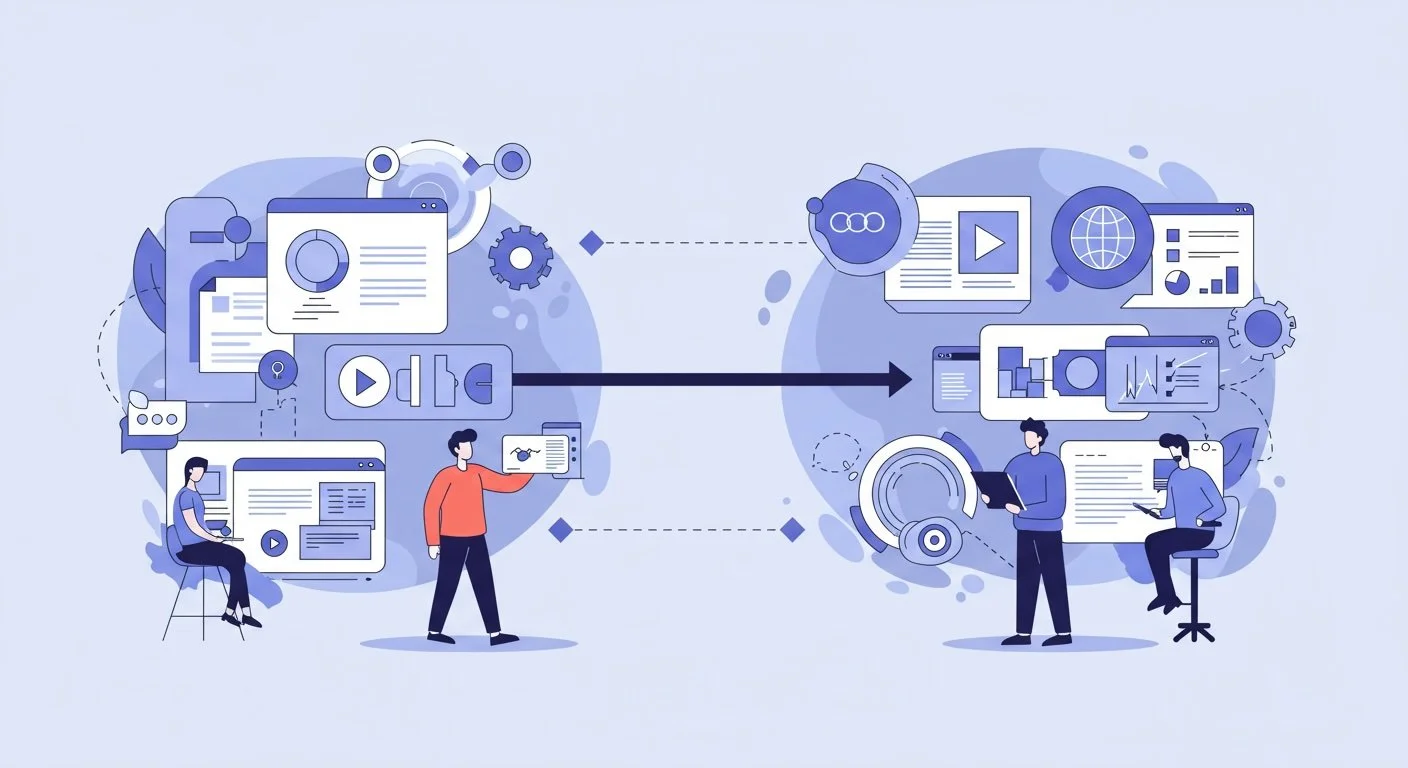
A hybrid model allows:
Large, high-impact films to be scoped and resourced as standalone projects
Ongoing design and short-form animation to be handled through a predictable monthly subscription
For creative directors, this means:
Fewer vendors to manage
Predictable creative support month to month
Flexibility for big campaigns without long-term headcount increases
A creative partner who understands the brand across all formats
This mirrors how software companies actually operate: continuous iteration with occasional high-visibility moments.
What Creative Directors Should Look for in an External Animation Partner
When scaling animation without hiring internally, creative directors should prioritize partners who:
Understand software products and SaaS workflows
Can support both large campaigns and ongoing needs
Maintain consistency across animation and design
Are transparent about when different production models make sense
The goal isn’t just output — it’s creative continuity.
The Bigger Takeaway
Scaling 2D animation isn’t about finding the cheapest vendor or the flashiest reel.
It’s about building a system that:
Supports long-term creative momentum
Reduces operational friction
Keeps visual storytelling aligned with evolving products
As more software companies rethink how they approach creative production, hybrid models — combining project-based animation with ongoing creative subscriptions — are becoming a strategic advantage rather than an experiment.
If you’d like to see how this approach looks in practice, our 2025 2D animation showreel highlights work produced through long-term partnerships with software companies.
If you’d like to discuss potentially working together, join our waitlist here.